
Real engagements.
Documented outcomes.
Seven engagements drawn from Peter McNair's 50-year career: each showing the situation that existed, the approach taken, and the outcome delivered. No composites. No generalisations.
Select a case study
National Safety Management System across 50+ airports
HSE frameworks for Oman's upstream oil and gas sector
OSH legislation built from the ground up to ILO standards
Fatal incident forensics and expert witness testimony
OHS policy and management systems across countries and air forces
Health policy manual deployed across 18 countries
Pre- and Postgraduate Education, Competence-Based Apprenticeships, HSE Systems Development, and Professional Development Programmes
National Safety Management System across 50+ airports
General Authority of Civil Aviation (GACA)
The General Authority of Civil Aviation (GACA) is Saudi Arabia's national civil aviation regulatory body, responsible for safety oversight across one of the fastest-growing aviation markets in the world. At the time of the engagement, Saudi Arabia's airport network: five major international hubs and over 50 regional airports: needed improvement in Hazardous Materials policy, training and operation requiring Safety Management Systems and training framework aligned to ICAO standards.
Hazardous materials handling and dangerous goods protocols varied significantly between airports. ICAO compliance required a systematic, operational framework: not a set of policies, but a working system embedded in daily airport operations across every site in the network.
The Engagement
- Established the foundation for a unified, ICAO-aligned Safety Management System (SMS) framework across the GACA airport network, creating consistency and standardisation where local practices had previously varied
- Strengthened hazardous materials and dangerous goods management capabilities across regional airports by introducing structured processes, guidance, and oversight mechanisms
- Developed a scalable and flexible implementation approach tailored to a network of more than 50 geographically dispersed airports, accommodating varying operational capacities and resource levels
- Successfully aligned the framework with national regulatory requirements, enabling the pathway for formal approval, adoption, and sustainable implementation across the network
The Approach
- Baseline audit
Conducted safety audits across major international hubs and representative regional airports to establish the gap between current practice and ICAO SMS requirements.
- SMS framework design
Designed a scalable, ICAO-compliant SMS framework tailored to GACA's regulatory context, operational scale, and the specific risk profile of each airport category.
- Dangerous goods programme
Developed comprehensive hazardous materials and dangerous goods management programmes, including operational procedures, documentation packages, and site-specific protocols.
- Personnel training
Delivered implementation training to safety personnel across Dammam, Riyadh, Jeddah, Madina, and 50+ regional airports: embedding the framework in the teams responsible for operating it.
- Regulatory alignment
Coordinated with the national aviation authority throughout, ensuring every stage of the system met the requirements for formal approval before implementation was finalised.
The Outcome
- Hazardous Materials and Dangerous Goods Training and Safety Management Systems approved by the national aviation authority and implemented across the full GACA airport network
- Consistent ICAO-aligned dangerous goods protocols operational at all 50+ airports
- Safety management capability improvements embedded in airport operations
HSE frameworks for Oman's upstream oil and gas sector
Upstream Operators & Contractors: OPAL
In Oman's developing upstream oil and gas sector, structured Health, Safety and Environment management systems and training required updating and improvement across the contractor base. Operators were working with limited accredited safety management oversight, and the industry body responsible for professional accreditation: OPAL (the Omani national oil and gas association): required improved training programmes aligned to international standards.
The engagement required not only designing, delivering and implementing HSE systems for operators and contractors, but simultaneously establishing the credibility and accreditation that would give those systems weight. Without OPAL recognition, a consultant's recommendations carried limited authority with the major operators.
The Engagement
- The engagement presented an opportunity to establish structured and consistent HSE management systems across upstream operations, creating a stronger foundation for safety performance
- A unified and standardised approach to contractor safety oversight was developed, helping to drive consistency and effective risk management across high-risk operational environments
- The project enabled the achievement of OPAL accreditation for independent HSE consultancy services in Oman, establishing alignment with the industry's recognised professional benchmark
- In addition to securing industry accreditation, the initiative successfully addressed the requirements for government recognition through the Ministry of Manpower, strengthening regulatory and stakeholder confidence
- Working directly with contractors provided the opportunity to design practical, site-level HSE systems that complemented corporate policies while supporting effective implementation in day-to-day operations
The Approach
- HSE baseline assessment
Assessed the HSE baseline across upstream operators and their contractor supply chains, identifying the specific gaps between current practice and the risk profile of high-hazard upstream environments.
- Management system design
Designed HSE management systems tailored to the operational realities of upstream oil and gas: addressing the specific hazards present, rather than adapting generic frameworks.
- OPAL accreditation
Pursued and obtained OPAL accreditation through the Ministry of Manpower recognition process: among the first independent consultants in Oman to achieve this, establishing authority with major operators.
- Contractor integration
Worked directly with operator contractor supply chains to embed HSE systems at site level: ensuring safety management functioned in practice, not just in documentation.
- Committee appointment
Engagement with the OPAL Upstream Health and Safety Committee allowed sector-wide influence: shaping standards that applied across the industry, not just to individual clients.
The Outcome
- Appointed to the OPAL Upstream Health and Safety Committee as a standing member: influencing HSE standards across the entire upstream sector
- Among the first independent HSE consultants in Oman to receive OPAL accreditation, establishing a benchmark for professional standards in the industry
- HSE management systems and training programmes adopted by multiple upstream operators: raising the baseline across the sector rather than improving a single site
- Contractor supply chain training to international standards improved structured safety management, reducing the uncontrolled variation in high-risk upstream environments
OSH legislation built from the ground up to ILO standards
Multiple National Governments
Developing Occupational Safety and Health legislation is not a drafting exercise: it is a process of translating international standards into enforceable national law that reflects a country's industrial base, workforce profile, and existing legal architecture. Several governments in the Middle East and the UK engaged Peter to build or rebuild that legislative foundation, in countries ranging from those with fragmented existing laws to those starting from zero.
The International Labour Organisation's OSH standards provided the framework, but ILO compliance alone is not enough. Legislation that reads correctly in Geneva but cannot be practically enforced by a national inspectorate: or understood by the industries it governs: fails at the first test. The engagement required both legal and operational knowledge, and direct engagement with government at ministerial level.
The Challenge
- Several jurisdictions had no OSH legislative framework at all: legislation needed to be built from zero in environments without an existing regulatory infrastructure
- In others, laws existed but were fragmented, contradictory, or predated modern industrial practices and had never been enforced
- Royal Decrees, Ministerial Decisions, and national labour law processes varied significantly between countries: each required a different route to legal adoption
- Legislation written to international standards but without operational grounding tends to be ignored: bridging the gap between written law and practical compliance was as important as the legislation itself
- Building enforcement capability in parallel with legislation was necessary: laws without inspectors are aspirations
The Approach
- Legal framework review
Reviewed existing legal structures in each jurisdiction: identifying gaps, contradictions, and areas where international standards were absent or incompatible with national law.
- OSH legislation drafting
Drafted national OSH legislation benchmarked against ILO and international standards, adapted to each country's industrial base, workforce profile, and constitutional and administrative requirements.
- Legislative process navigation
Worked through the relevant legal channels in each jurisdiction: Royal Decrees, Ministerial Decisions, and national labour law processes: to move from draft to enacted legislation.
- Implementation guidance
Developed practical implementation guidance alongside the legislative text: ensuring that the regulations could be understood, applied, and enforced by the organisations responsible for doing so.
- Enforcement infrastructure
Supported the development of the enforcement agencies and inspection frameworks needed to give the legislation practical effect: so enacted law translated into real-world compliance.
The Outcome
- National OSH legislation adopted across multiple jurisdictions in the UK and the Middle East, aligned to ILO and international standards and practically enforceable from enactment
- Legal frameworks have since underpinned national industrial safety performance in each country: providing the foundation for subsequent enforcement, audit, and compliance infrastructure
- Enforcement agency development supported as a direct continuation of the legislative work, ensuring laws were backed by operational capability
- Governments engaged as a subject matter expert at ministerial level: legislative advice was backed by the operational credibility to understand how each law would function in practice
Fatal incident forensics and expert witness testimony
Legal, Insurance & Regulatory Bodies
When a fatal incident occurs in a high-hazard environment, the investigation that follows carries consequences that extend well beyond the immediate event. Root cause findings determine regulatory action, insurance liability, criminal or civil proceedings, and the changes made to prevent recurrence. The standard of investigation must withstand expert scrutiny: from regulators, opposing legal teams, and insurers: in formal proceedings where the findings will be challenged.
Peter has led major investigations across aviation, oil and gas, electrical, and industrial environments: including incidents involving fatalities, complex evidence retrieval from remote or submerged locations, and technical analysis requiring aerospace engineering expertise. He acts as a registered expert witness, providing testimony in court and insurance proceedings.
The Challenge
- Evidence retrieval from remote, damaged, or submerged locations required specialist recovery operations: helicopters, aircraft, and maritime assets deployed under difficult conditions
- Multi-agency investigations involving regulatory bodies, insurers, and legal teams simultaneously: each with different information requirements and legal obligations
- Technical data analysis: including flight recorder data and maintenance documentation: requiring engineering expertise beyond standard HSE investigation
- Findings needed to withstand cross-examination by opposing experts in formal legal and insurance proceedings, not just satisfy internal review
- Operational pressure from clients to resume normal activity while investigation was ongoing: managing the tension between continuity and evidence preservation
The Approach
- Rapid mobilisation
Immediate deployment to preserve the evidence environment: controlling site access, securing physical evidence, and preventing deterioration or interference before formal investigation commenced.
- Evidence recovery
Directed recovery operations including helicopter, aircraft, and maritime asset deployment for evidence retrieval from remote and difficult locations. Coordinated with multiple agencies while maintaining evidence integrity.
- Technical analysis
Analysed flight recorder data, maintenance records, operational documentation, and physical evidence using aerospace engineering expertise applied directly to the investigation.
- Root cause analysis
Structured root cause analysis using established investigation methodologies: identifying direct causes, contributory factors, and systemic failures that allowed the incident to occur.
- Expert witness preparation
Prepared formal investigation reports fit for regulatory review, court proceedings, and insurance assessment. Provided expert witness testimony in legal and insurance proceedings, defending findings under cross-examination.
The Outcome
- Expert witness testimony provided in multiple legal and insurance proceedings: findings successfully defended under challenge from opposing experts
- Root causes formally established and documented across fatal and serious incidents in aviation, oil and gas, and industrial environments
- Findings used by regulators to drive legislative and procedural changes, preventing systemic failures from causing further incidents
- Recommendations implemented by operators across sectors, with follow-on engagements to verify recurrence prevention measures were effective
OHS policy and management systems across countries and air forces
British Royal Air Force / Royal Air Force of Oman
The British Royal Air Force and the Royal Air Force of Oman are not standard workplaces. Fast jet operations, high-hazard engineering environments, around-the-clock operational tempo, and the absolute consequences of safety failure create requirements that generic HSE management systems cannot meet. Safety systems in these environments must function under operational pressure, not just pass an audit.
Peter's own 30-year career in the British RAF in fast jet operations gave him the operational credibility to engage with both air forces on equal terms. The engagement was not delivered as external consultancy but as a trusted partner with direct experience of the environments being managed.
The Challenge
- Safety management systems needed to function under operational conditions, not just administrative environments: without reducing the operational capability of either air force
- Engineering processes for fast jet aircraft required safety integration at every level, from daily servicing to major maintenance events, without creating procedural overhead that slowed operations
- Systems needed to meet UK HSE regulatory requirements and Omani national standards simultaneously: two different legal frameworks with different documentation and compliance requirements
- Cross-national training delivery to Italian Air Force officers on Tornado aircraft required the same technical content to be communicated across language and cultural differences
- Resistance to external consultants is common in military organisations: credibility had to be established through demonstrated operational knowledge, not credentials alone
The Approach
- OHS policy development
Designed OHS policies from the ground up for both air forces: establishing the legal foundations, minimum compliance standards, and the specific obligations each organisation carried under their respective national frameworks.
- Integrated management systems
Built HSE Management Systems covering engineering, ground operations, and day-to-day safety: integrated into how work was actually done, not added as a parallel administrative process.
- Dual regulatory alignment
Aligned systems with both UK HSE requirements and Omani national standards: ensuring compliance was achieved under both frameworks without duplicating documentation or creating conflicting processes.
- Technical safety training
Delivered technical safety training to 200+ Italian Air Force officers on Tornado aircraft servicing protocols: adapting the same operational content to a different air force operating the same aircraft type.
- Cultural embedding
Worked to embed safety management in operational culture: so safety behaviours were part of how engineering and operations teams worked, not a compliance requirement imposed from outside.
The Outcome
- Military-grade safety management systems operational across two air forces, meeting the legal requirements of two different national regulatory frameworks
- Technical safety training successfully delivered to 200+ Italian Air Force officers: cross-national compliance achieved across Tornado fast jet operations
- Safety management embedded in fast jet engineering and ground operations, functioning under operational pressure rather than only in administrative contexts
Health policy manual deployed across 18 countries
International Banks
International Banks is one of the largest financial institutions in the Arab world, operating across Oman and an international network spanning 18 countries. As the organisation scaled its operations globally, the need emerged for a unified occupational health policy framework that could be consistently applied across an internationally distributed workforce: in markets with different regulatory environments and operational conditions.
Developing health and safety policy for a financial services organisation at this scale is not a documentation task. It requires translating operational health requirements into a framework that works for a white-collar workforce across diverse geographies: and ensuring that what is written can be practically implemented and understood by the staff it governs.
The Challenge
- The organisation operated across 18 countries with different regulatory environments, employment laws, and occupational health requirements
- Existing health policy was fragmented and inconsistent across business units: no unified framework existed that applied to the full international workforce
- Financial services workforces have a distinct occupational health profile from industrial or field-based organisations: policy content needed to be relevant and proportionate to the actual risk environment
- A manual deployed across 18 countries needed to be practical and usable: not aspirational language that varied in application from site to site
The Approach
- Baseline review
Assessed the existing health and safety provisions across International Banks operations: identifying the gaps between current practice and a consistent, internationally applicable framework.
- Policy framework development
Developed a comprehensive occupational health policy manual tailored to International Banks' workforce profile, operational context, and the regulatory requirements applicable across its international footprint.
- Content calibration
Ensured the policy content was proportionate to the actual occupational health risks present in financial services environments: avoiding the generic industrial safety content that makes policies inapplicable and therefore unused.
- International alignment
Structured the manual for deployment across all 18 countries, with a framework that accommodated different national regulatory requirements without requiring separate documentation for each jurisdiction.
The Outcome
- Occupational health policy manual adopted and deployed across International Banks' full international operation: 18 countries covered by a single unified framework
- Consistent health policy baseline established across a geographically dispersed workforce for the first time
- Policy content matched to the actual occupational health profile of a financial services organisation: relevant and proportionate rather than generic
In Practice
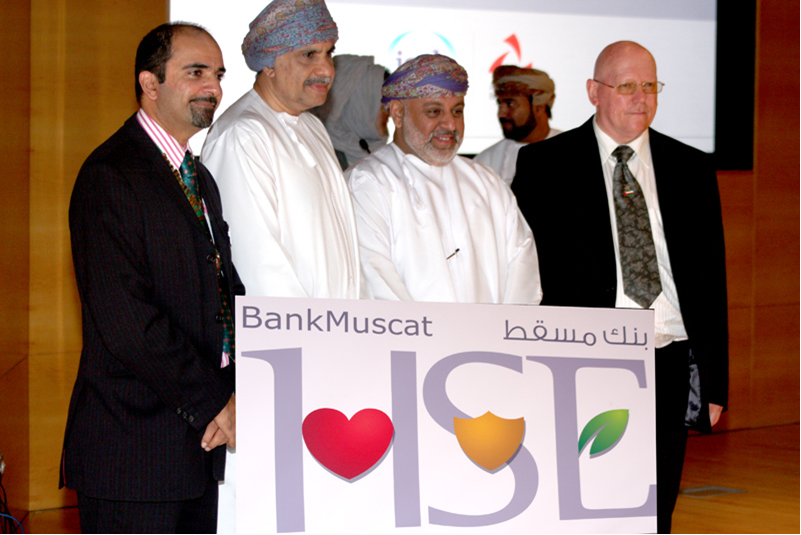
IOSH President and IOSH Chairman support International Banks as Ambassadors for Safety: 2012
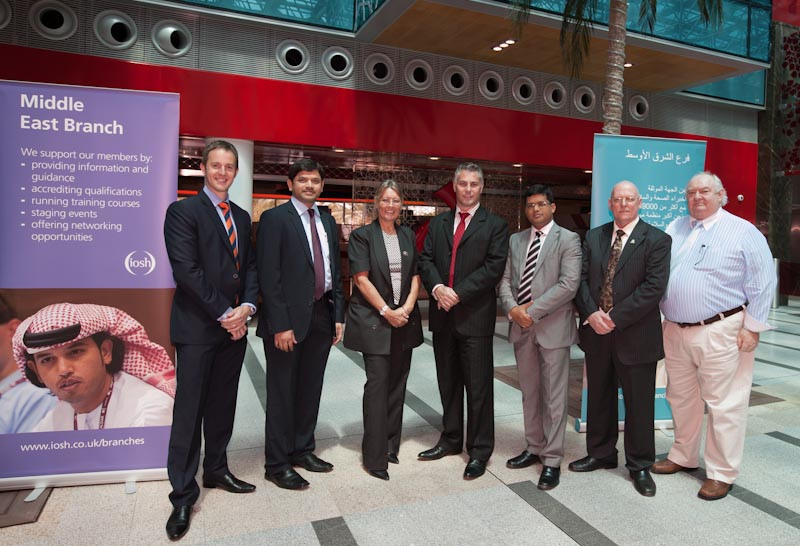
IOSH Middle East Branch event held at International Banks
Pre- and Postgraduate Education, Competence-Based Apprenticeships, HSE Systems Development, and Professional Development Programmes
International Universities
Universities occupy an unusual position in health and safety management. They are simultaneously employers, research environments, teaching facilities, and public buildings: with a risk profile that spans laboratory chemical hazards, contractor management, large-scale events, and a population of students who are neither employees nor members of the public. Generic HSE management templates rarely fit this environment well.
International universities were developing their safety management capability as their institutions expanded, requiring genuine system development rather than policies that would simply sit on a shelf. Universities and working professionals pursuing health and safety qualifications needed education grounded in operational experience, not just textbook knowledge.
The Challenge
- Academic environments have complex, multi-category risk profiles that generic HSE frameworks do not address: the university needed a system designed for how it actually operated, not adapted from a corporate template
- Universities were building safety management capability from scratch, without an established baseline of policies, procedures, or trained personnel to build on
- University programmes required rigorous academic delivery to working professionals who already held safety responsibilities: the content had to be operationally credible, not theoretical
- HSE apprenticeship frameworks needed to bridge the gap between academic qualification content and the practical demands of HSE roles in industry
- Institutional governance structures in universities create constraints that are different from commercial organisations: safety systems had to work within those structures, not require them to change
The Approach
- Risk profile assessment
Assessed the University's full operational risk profile: covering laboratories, construction and maintenance activities, public events, campus operations, and the specific risks associated with an academic population.
- HSE system design
Designed an HSE management system tailored to the academic environment and the Omani regulatory context: covering all risk categories identified, with documentation and procedures that staff could actually use.
- Policy and procedure development
Developed the full policy and procedure suite for the University: including laboratory safety, contractor management, event safety, emergency procedures, and a document control system to keep everything current.
- Professional programme delivery
Lectured at the University of Nottingham, delivering degree and diploma-level programmes to working health and safety professionals: grounding academic content in operational practice at every stage.
- Apprenticeship framework development
Led the development of HSE apprenticeship frameworks in collaboration with industry partners: aligning qualification content with the real requirements of frontline HSE roles and the expectations of employers.
The Outcome
- The University equipped with a structured, regulatory-compliant HSE management system covering all operational risk categories: built for the institution rather than adapted from a generic template
- Degree and diploma programmes delivered to working health and safety professionals at Universities, combining academic rigour with direct operational grounding
- HSE apprenticeship frameworks developed that bridge academic qualification and frontline practice: treated as an operational discipline, not a theoretical one
- Both institutions left with systems and programmes that continued to develop after the engagement ended, rather than requiring ongoing dependency on external consultancy
Your engagement, delivered to the same standard
Every Vero engagement is led personally by Peter or Marielou: not delegated to a junior associate.